

Waymo announces partnerships all the time, but this morning’s announcement of a manufacturing partnership with Toyota seems particularly important. “Toyota and Waymo will begin initial operations to test and validate an autonomous Toyota bZ4X fleet in Japan in 2027,” Waymo said in a blog post.
After debuting the vehicle in Japan, Waymo plans to expand it to the UK and other markets in the coming years.
I had never heard of the bZ4X, but it’s an electric crossover SUV that retails for $37,000. That’s about half the retail cost of the Jaguar I-Pace, which has been the backbone of Waymo’s fleet over the last six years. The price is on par with the two vehicles Waymo plans to introduce next: Chinese-made “Ojai” vehicles, which are being rolled out now in Texas and California, and a version of Hyundai’s Ioniq 5, which is expected to begin production in the coming months.
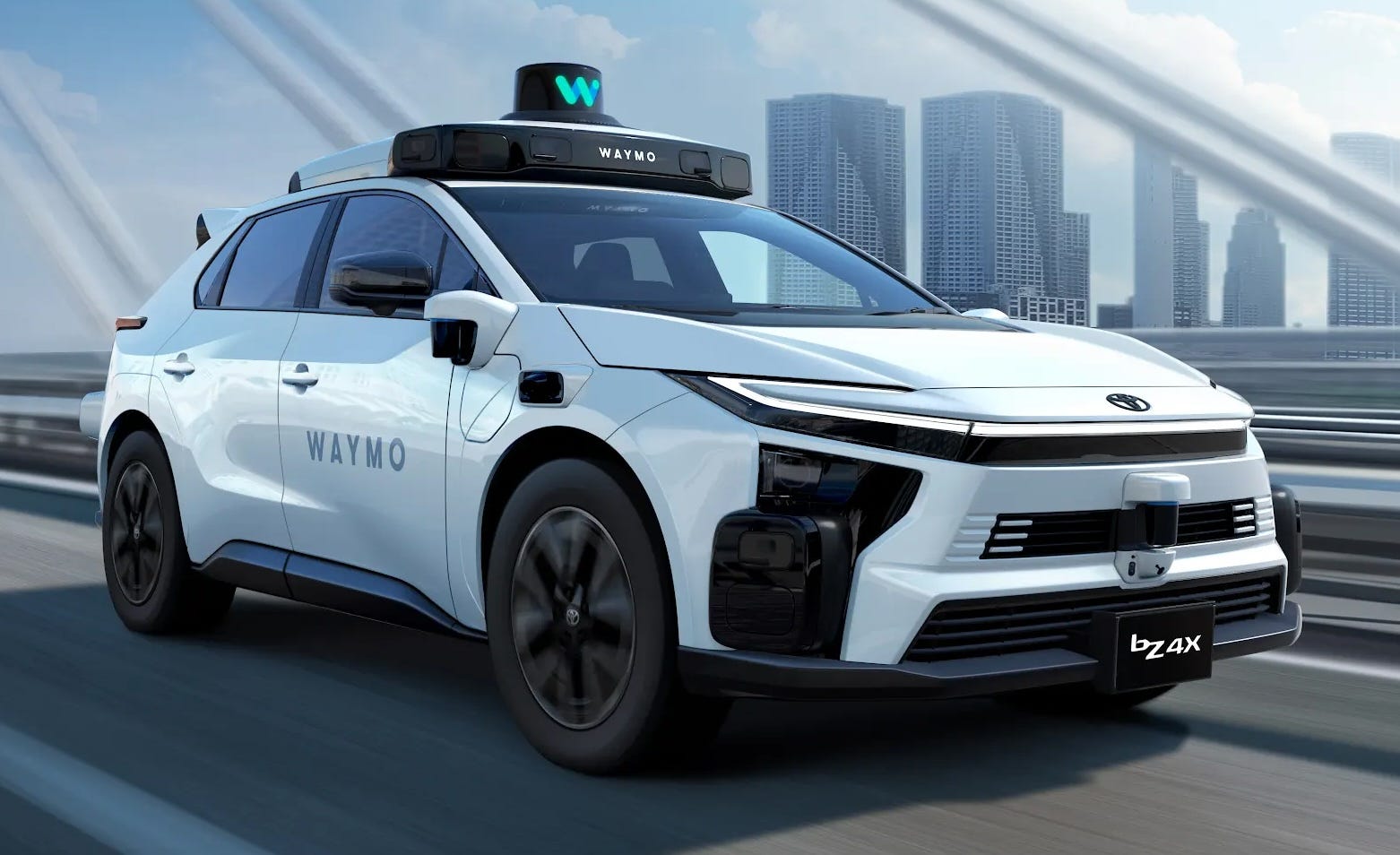
Probably the most important sentence in Waymo’s blog post is the one that says the entire manufacturing process “will take place under one roof, from assembling the base vehicle to integrating Waymo’s AV hardware.”
That’s not how Waymo did things in the past. Waymo purchased fully assembled I-Pace vehicles from Jaguar and shipped them to another vendor, Magna. Magna had to take the vehicles apart to add sensors and other hardware. Waymo has never said exactly how much this “upfitting” process takes, but a reasonable ballpark estimate is around $50,000. This helps to explain why this generation of vehicles was rumored to cost around $150,000 each — $70,000 for the base vehicle, $30,000 for the sensors and other extra hardware, and $50,000 for upfitting.
Waymo’s current generation of vehicles, dubbed Ojai, uses a cheaper base vehicle made by Chinese company Zeekr. Waymo likely took steps to streamline the upfitting process for Ojai as well. So these vehicles should have been much cheaper than their predecessor. However, Waymo suffered a major setback in 2024 when Joe Biden slapped 102.5% tariffs on Chinese-made electric vehicles.
These tariffs may have erased much of the cost savings from using the cheaper base vehicle, though it’s not clear how much. Estimates of the cost of the Ojai vehicle have ranged from $70,000 to $125,000.
In any event, it’s clear that Waymo needs more cars at lower prices. And that’s what Waymo’s recent deals with Hyundai and Toyota are designed to deliver. Completing the entire manufacturing process under one roof, as Toyota plans to do, should avoid the high upfitting costs of Waymo’s early vehicles. And making vehicles in Japan for use in the Japanese market (and eventually other non-US countries) allows Waymo to entirely sidestep headaches related to US tariffs.
This is important because I view vehicle supply as the biggest obstacle to Waymo’s growth and eventual profitability. The company’s technology now works quite well and Waymo has an excellent safety record. Waymo is operational in 15 markets. Waymo is facing some regulatory headwinds in blue states, but there is still plenty of room to expand service in red states and internationally.
But it’s hard to turn a profit with a vehicle that costs $150,000 or even $100,000. And it’s even harder to scale up a profitable service if you can’t get vehicles at all. Jaguar ended production of the I-Pace in 2024. Waymo seems to have scooped up a few thousand of these vehicles from Jaguar’s final few months of production and spent the last 18 months adding them to its robotaxi fleet.
But upfitting an expensive, discontinued vehicle was never going to be a long-term solution. Neither was importing Chinese-made cars subject to a 102.5% tariff in your home market.
If all goes well, Waymo will eventually have three different vehicle options to choose from — Zeekr, Hyundai, and Toyota. This will give Waymo some leverage in its negotiations with each supplier. And it provides a bit of an insurance policy: if manufacturing hits a snag at any one of these companies, Waymo can order extra vehicles from the other two.
But we don’t know how soon we will reach this point. Waymo says it will “begin initial operations” in 2027, but it’s not clear if this represents the start of volume production or if (as seems more likely) volume production will begin in 2028 or beyond.
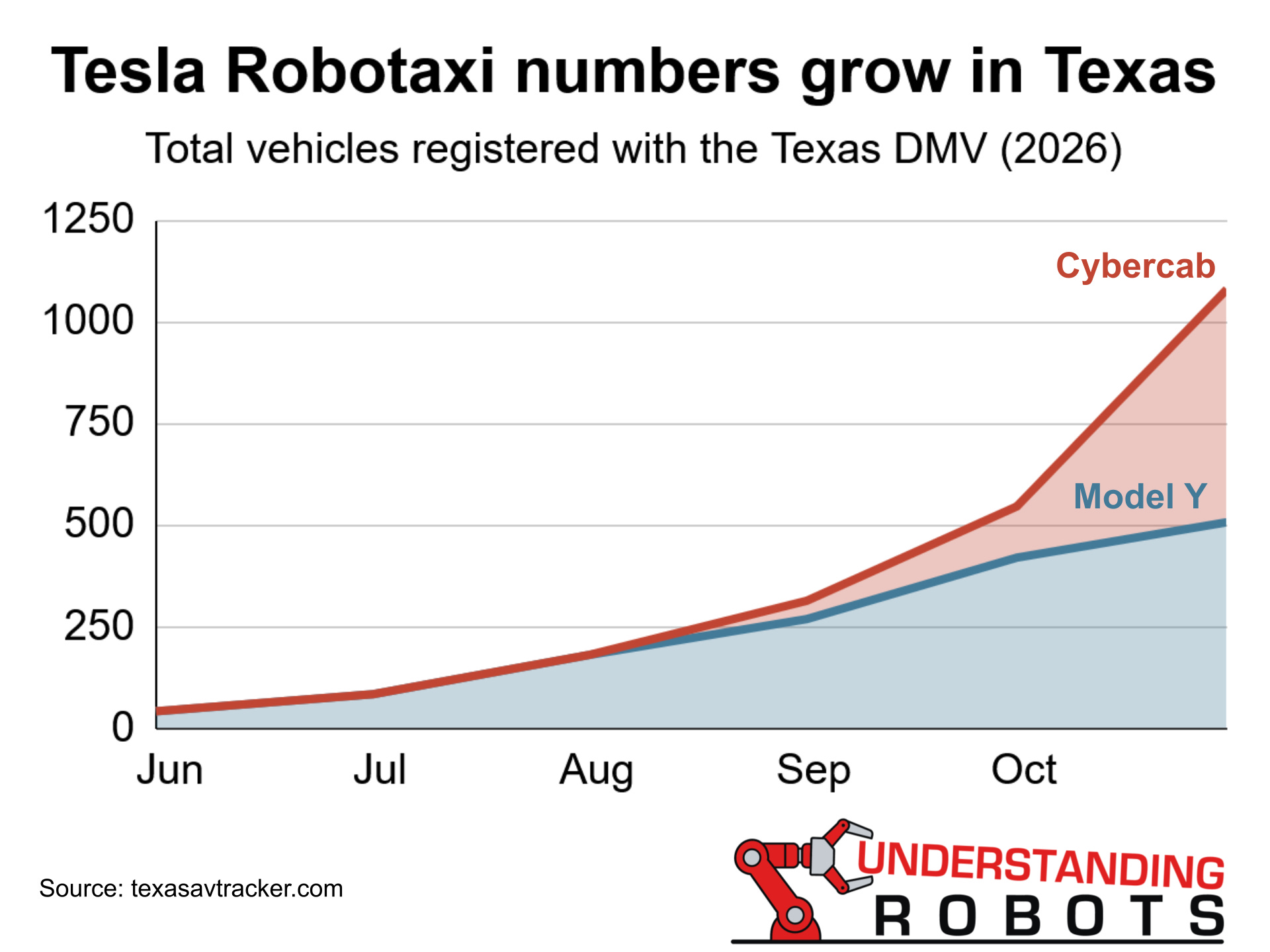
Improving vehicle supply is particularly crucial to Waymo right now because its most formidable rival — Tesla — is a vertically integrated car manufacturer. Tesla could face a number of challenges scaling up its Robotaxi service, but manufacturing enough vehicles isn’t going to be one of them. Indeed, Tesla has added another 400 Cybercabs to its Texas fleet in the month since I last wrote about Tesla’s growing presence in the state. At that pace of growth, Tesla will reach Waymo’s current fleet size — around 4,000 vehicles nationally — some time next year.
Tesla could face a number of other challenges, however. To see examples, we only have to look at the kinds of challenges Waymo faced as it scaled up its own AV services over the last five years. For example, in 2023 Waymo had a lot of friction with first responders in San Francisco, who complained that Waymo’s vehicles would get stuck at crash scenes or drive over fire hoses.
There have also been a few incidents where many Waymos froze simultaneously during unusual incidents. Last December, dozens of Waymos froze during a power outage that knocked out many stoplights. Then on the Fourth of July, unusually severe traffic caused a number of Waymos to stall. Some ran out of power and had to be towed.
Incidents like these are easy to overlook with a few dozen vehicles, but they become increasingly serious when there are hundreds or even thousands of vehicles in a city. If Tesla handles them clumsily, it could spark a political backlash that forces the company to slow down its expansion.
Most importantly, Tesla could get into a serious crash. Cruise looked like Waymo’s most formidable rival until October 2023, when a serious crash — and a botched post-crash response by the company — forced Cruise off the road. I’m not predicting that this will necessarily happen to Tesla, but it’s certainly one way the current AV race could end badly for the company. If there’s even a single fatal crash involving a driverless Cybercab where Tesla is plausibly at fault, it could change how elected officials view the technology, even in a conservative state like Texas.
Still, Waymo can’t afford to get complacent because Elon Musk is very good at completing difficult logistical tasks quickly. Think, for example, of the 122-day sprint to build xAI’s Colossus data center — far faster than other hyperscalers or frontier labs have been able to manage. If Musk brings that same hustle to the process of manufacturing Cybercabs, building depots, and hiring support staff, Tesla could reach Waymo’s current scale surprisingly fast.
Last week, Semafor reported that Waymo is aiming to grow its fleet from 4,000 vehicles now to 8,000 at the end of 2026 and 20,000 at the end of 2027. Growing fivefold in 15 months would be an impressive accomplishment for most companies. But it might not be enough to stay ahead of Tesla.
This is great news! Happy to have Toyota going after this with deployment in Japan.
The upfitting step at roughly $50,000 per car is the detail I hadn't seen broken out. If the fleet really goes from 4,000 to 20,000 by end of 2027, the vehicle mix by then looks like a bigger driver of unit economics than the headline count. Is there any data on utilization per vehicle yet?